Strategic Context

The convergence of two distinguished educational institutions—China Association for Educational Technology (CAET) and ELITE Innovation College Cambridge (EICC)—represents more than institutional collaboration; it embodies a philosophical synthesis of complementary civilizational approaches to knowledge. CAET, as China's premier professional organization advancing educational technology, brings penetrating insight into the world's largest digital education ecosystem, together with extensive networks spanning Chinese universities, K-12 systems, and policy frameworks. EICC channels Cambridge's centuries-old academic excellence through the lens of cutting-edge innovation, bridging Oxbridge's humanistic traditions with entrepreneurial dynamism. This Sino-UK partnership transcends transactional cooperation to manifest a deeper dialectic: CAET's implementation scale and technological infrastructure engage in productive tension with EICC's theoretical frameworks and international academic credibility. Here, Eastern educational transformation and Western institutional innovation do not merely coexist but mutually constitute one another, generating shared knowledge exchange, joint research capabilities, and coordinated influence in multilateral policy forums.
Artificial Intelligence emerges as the ontological force reconstituting higher education's fundamental purpose. AI transcends instrumental utility to become the cognitive architecture of future learning—enabling personalized adaptive curricula, intelligent tutoring ecosystems, and predictive analytics that liberate educators for higher-order mentorship. Yet the philosophical imperative remains clear: AI must serve not as replacement for human encounter but as augmentation of intellectual capability, creating hybrid ecosystems where machine efficiency amplifies human creativity and wisdom. This paradigm shift demands international leadership to establish ethical guardrails, ensure equitable access, and prevent technological fragmentation that would Balkanize global knowledge.
This initiative advances through its unifying vision: "Co-Shaping the Global Future of Digital Education: Promoting Global Connectivity through Intelligent Integration, Defining an Innovative Future through Boundless Education." This framework recognizes that intelligent integration—the seamless weaving of AI, analytics, and immersive technologies into educational fabric—must cultivate global connectivity rather than digital isolation. Boundless Education dismantles constraints of geography, temporality, and institutional hierarchy, envisioning knowledge that flows fluidly across continents, disciplines, and socioeconomic boundaries. By uniting CAET's technological prowess with EICC's education innovation research, this partnership constructs not merely infrastructure and standards, but the philosophical foundations for education's next evolution: one simultaneously more technologically sophisticated and more humanely accessible than ever before.
Co – Chairs of International Academic Committee
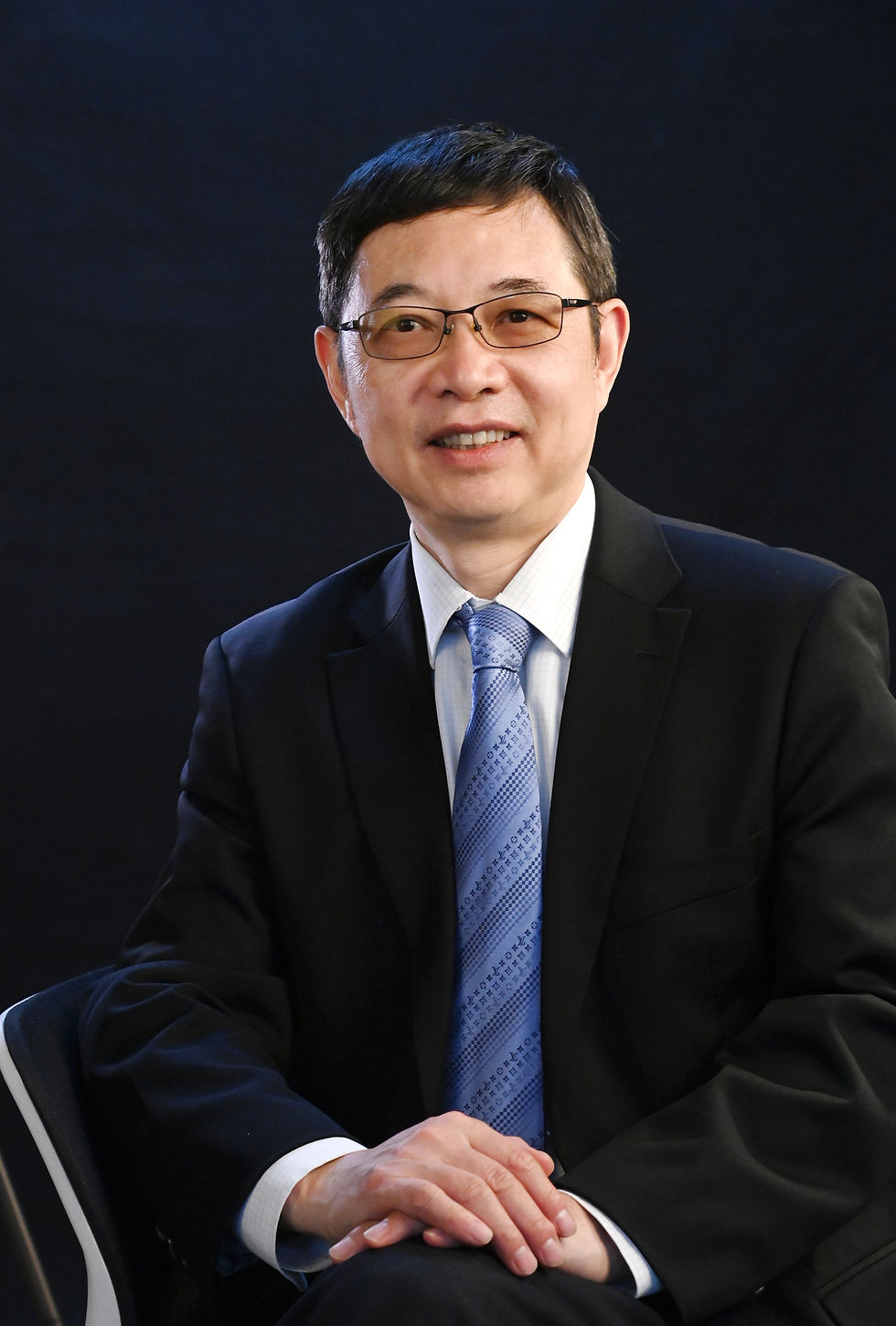
Prof Zongkai Yang
Chairman, China Association for Education Technology (CAET), and former President of Wuhan University of Technology, China

Prof Richard Li-Hua
Founder and President, ELITE Innovation College Cambridge, Founder President of China Association for Management of Technology (CAMOT), UK
Co – Chairs of the Forum

Prof Li Chen
Vice Chairwoman and Secretary-General, China Association for Education Technology (CAET), and former Vice President of Beijing Normal University, China

Prof Lucy Lu
Provost, ELITE Innovation College Cambridge, and Vice President of China Association for Management of Technology (CAMOT), former Provost of Arden University, UK
International Academic Committee

Prof Dehua Zeng
Deputy Director of the Education Management Information Centre, Ministry of Education, and Vice Chairman, CAET, China

Prof Junjie Shang
Former President
china University of Political Science and Law
China

Prof Ronghuai Huang
Beijing Normal University, and Vice Chairman, CAET, China

Prof Xiaoliu Zhong
Tsinghua University, and Chairman, CAET, China

Prof. Rupert Wegerif
Founder and academic director of the Digital Education Futures Initiative at Hughes Hall, Cambridge University

Dr. Bo Jiang
Chairman, Xi’an Peihua University, China

Prof. Alison Honour
Vice-Chancellor, Bournemouth University, UK

Prof. Alan Barrell
Cambridge Worldwide Associates

Prof Fred Phillips
President, TANDO
USA

Prof Dominique Jolly
Professor of Business Strategy, Chez Webster University, Geneva, Switzerland

Prof Phillips Laird
Senior Vice President, Trinity West University, Canada

Mr Ramu Damodaran
Chairman of United Nations Academic Impact, 2010-2022

Dr Maxime Crener
Former Founder and President of International University of Monaco

Prof Jin Huang
Former President of China University of Political Science and Law, China

Prof Maurits Voon Rooijen
President, University of Europe for Applied Science, Germany

Prof Jin Chen
Director of Research Centre for Technological Innovation, Tsinghua University, China

Prof Georges Haour
Professor of Technology and Innovation Management at IMD, Lausanne, Switzerland